Key Takeaways
- Incorporating native plants reduces maintenance and supports local ecosystems.
- Water-efficient landscaping conserves resources and lowers utility bills.
- Edible gardens provide fresh produce and encourage self-sufficiency.
- Natural materials and earth tones create a harmonious connection with the environment.
- Outdoor wellness spaces offer a retreat for relaxation and mental well-being.
Table of Contents
- Embracing Native and Regionally Adapted Plants
- Implementing Water-Efficient Landscaping
- Integrating Edible Gardens into Your Landscape
- Utilizing Natural Materials and Earth Tones
- Designing Outdoor Wellness Spaces
- Creating Pollinator-Friendly Gardens
- Developing Wildlife Habitats
- Incorporating Smart Technology in Landscaping
With increased focus on environmental consciousness, sustainable landscape design is transforming how homeowners approach their outdoor spaces. The latest landscaping trends blend eco-friendly practices with modern aesthetics, offering benefits that extend beyond curb appeal. Homeowners now prioritize landscapes that are as healthy for the planet as they are inviting for friends and family.
From selecting resilient, regionally adapted plants to optimizing water use and creating spaces for relaxation, today’s sustainable landscape trends encourage both beauty and responsibility. These design ideas not only minimize environmental impact but also create outdoor environments that foster wellness and community connection. With thoughtful planning, an eco-conscious landscape can become the highlight of any modern home.
Incorporating practical solutions, such as efficient irrigation and natural materials, alongside purposeful gardens, can help homeowners reduce maintenance while supporting local ecosystems. Sustainable design also addresses climate adaptation, making outdoor spaces resilient to seasonal changes and unexpected weather events.
Beyond these primary considerations, ongoing landscape maintenance is crucial to ensuring your sustainable features flourish year after year. A regular care schedule keeps gardens healthy, supports pollinators, and protects your original investment in sustainable design.
Embracing Native and Regionally Adapted Plants
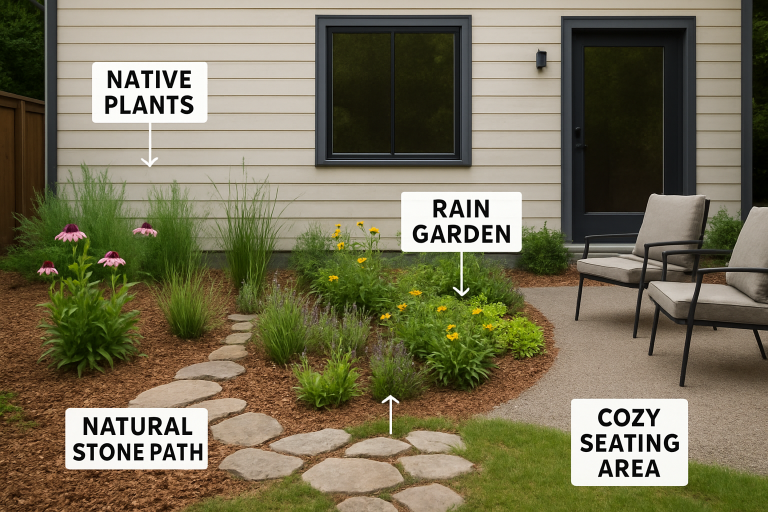
Native and regionally adapted plants consistently outperform non-natives in local climates. Because these plants evolved to thrive under specific regional conditions, they generally require less water, fertilizer, and intervention than exotic varieties. Beyond reducing homeowners’ workload, a native planting plan can increase biodiversity by attracting birds, insects, and beneficial pollinators native to the area. Native wildflowers, grasses, and shrubs also resist local pests and diseases, reducing the need for chemical pesticides and creating a flourishing, balanced ecosystem. For more on the advantages of native plant landscapes, consider this resource from the Associated Press.
Implementing Water-Efficient Landscaping
Conserving water is a foundational principle in sustainable landscaping. Xeriscaping, which emphasizes drought-tolerant plants and efficient irrigation, directly addresses resource conservation. Modern homeowners often minimize expanses of turf grass in favor of mulched beds, stone pathways, and rain gardens. Drip irrigation and smart controllers that adjust for weather and soil moisture are increasingly popular for reducing waste and controlling costs. Responsible water management is vital in areas prone to drought or subject to water restrictions, and these efforts are both practical and environmentally necessary.
Integrating Edible Gardens into Your Landscape
Edible and ornamental gardening are merging as more homeowners seek fresh, homegrown produce alongside beautiful outdoor spaces. The concept of foodscaping places fruit trees, raised beds, and herb spirals as attractive focal points in the landscape rather than confining them to the backyard. This dual-purpose approach makes efficient use of available planting space while supplying nutritious food for your family. Edible gardens can also reduce food miles, inspire healthier eating, and foster community sharing and engagement. The HGTV edible landscaping guide features practical ideas for first-time gardeners.
Utilizing Natural Materials and Earth Tones
Natural materials chosen for garden paths, patios, and edging lend a soothing, cohesive quality to outdoor environments. Stone, wood, and clay reflect the local geology and create a seamless transition from the built environment to the surrounding natural areas. Earth-toned furnishings and finishes, with hues reminiscent of sand, clay, and foliage, ground the landscape in its setting. This return to organic color palettes and tactile materials contrasts with previous trends of sleek modern minimalism, creating outdoor spaces that feel warm and welcoming in every season.
Designing Outdoor Wellness Spaces
As homeowners seek tranquility and improved well-being from their landscapes, wellness-oriented spaces are a rising trend. Gardening areas for meditation, yoga, or simply quiet enjoyment can promote mindfulness and stress reduction. Elements like serene water features, wind chimes, and aromatic herbs (such as lavender and rosemary) enhance both ambiance and sensory experience. Carefully selected seating, soft lighting, and privacy screens transform gardens into restorative retreats, encouraging time spent outdoors and a closer connection to nature.
Creating Pollinator-Friendly Gardens
There’s growing awareness about the crucial role pollinators play in maintaining healthy environments. Gardens designed to attract bees, butterflies, and hummingbirds typically feature a varied mix of flowering plants that provide nectar across the growing season. Avoiding insecticides, supplying water sources, and planting in clusters further enhance the space’s ability to support pollinators. This biodiversity supports not only the immediate garden but also regional food production and native wildlife.
Developing Wildlife Habitats
Designing achievable, wildlife-friendly features allows gardens to become havens for birds, amphibians, and beneficial insects. Birdhouses, bat boxes, rock piles, and small ponds can provide essential shelter and nesting sites. Grouping native shrubs and trees creates layers for different wildlife, contributing to a thriving, interdependent ecosystem. Such biodiversity can positively influence pest management while offering delightful opportunities for wildlife observation, enriching the homeowner’s daily experience.
Incorporating Smart Technology in Landscaping
The integration of technology in landscape design boosts sustainability by optimizing resource use. Smart irrigation systems, weather-responsive lighting, and automated mowers can reduce waste and streamline maintenance. Mobile apps enable remote management, allowing schedules and settings to be adjusted on the fly for efficiency or while traveling. These advancements lead to healthier landscapes that require less intervention, demonstrating that technology and nature can coexist and even enhance one another.
Adopting sustainable landscaping trends is about more than just visual appeal. These practices improve the health of your garden, support regional ecosystems, and prepare your landscape for the challenges of a changing climate. By making thoughtful choices, homeowners can enjoy outdoor spaces that are vibrant, resilient, and beneficial for years to come.