Key Takeaways
- Warm weather can increase pest movement, feeding, and reproduction.
- Heavy rain can flood nesting areas, create standing water, and drive pests toward buildings.
- Humidity helps many pests survive by providing the moisture they need.
- Regular inspection, sanitation, drainage, and exclusion reduce pest pressure around a home.
- Integrated pest management begins with identifying the pest and addressing the conditions attracting it.
Table of Contents
- Why Weather Changes Pest Activity
- How Heat Affects Household Pests
- What Heavy Rain Can Do
- Why Humidity Matters
- Common Seasonal Pest Patterns
- A Simple Home Prevention Plan
- When to Consider Pest Control
- 2026 Weather-Based Pest Checklist
- Final Thoughts
Weather affects more than weekend plans. Temperature, rainfall, and moisture levels can change where insects and rodents travel, feed, breed, and shelter. Homeowners who understand those patterns can spot problems earlier and take practical steps before pest activity grows.
Whether you handle prevention yourself or work with Romney Pest Control, the most effective approach starts with noticing how conditions around the property change after hot spells, storms, and humid stretches.
Why Weather Changes Pest Activity
Pests respond to the same basic needs as other animals: food, water, shelter, and suitable temperatures. A shift in weather can make those needs easier or harder to meet outdoors, which may send pests closer to a house. However, the weather does not affect every species in the same way. Ants may become more visible after warmth or rain, while rodents may move into garages, attics, or wall voids when outdoor conditions become uncomfortable.
Weather also works alongside property conditions. A home with standing water, unsealed utility openings, overflowing trash, and dense vegetation near the siding is more likely to offer pests what they need, regardless of the season.
How Heat Affects Household Pests
Warm temperatures often increase insect activity. Ants, flies, cockroaches, mosquitoes, and wasps may travel farther in search of food and moisture, while their development can speed up when conditions are favorable. Heat can also dry outdoor soil and plants, making kitchens, bathrooms, pet bowls, and air-conditioning areas more appealing water sources.
Common signs of heat-related movement include ants trailing near counters, flies gathering around trash or drains, cockroaches appearing in kitchens or utility rooms, and insects collecting around doors, windows, and exterior lights. Rodents may also seek cooler, protected areas inside garages and storage spaces.
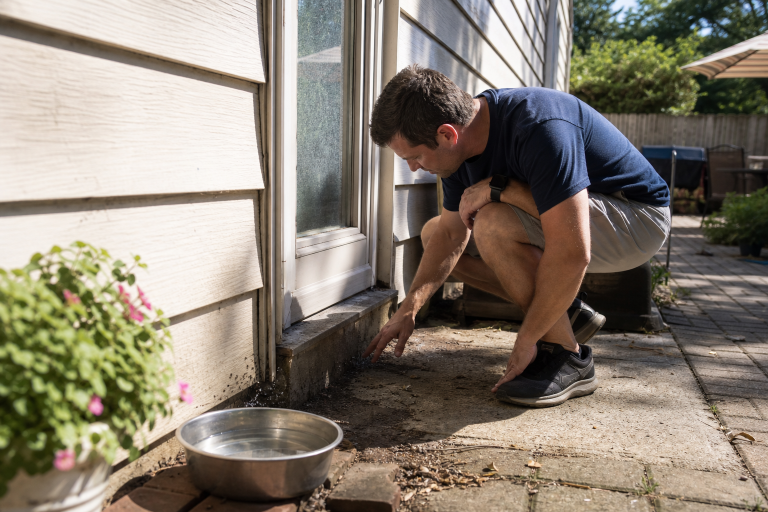
For example, a home may have no visible ant activity during a mild spring week, then develop a trail near a pet dish after several hot days. The heat did not create the colony. It may have made the available food and water inside easier to locate.
What Heavy Rain Can Do
Heavy rain can have opposite effects at once. It may briefly disrupt insects active on the ground, but it can also saturate soil, flood nests, and push pests toward dry shelter. Cracks around foundations, gaps beneath doors, damaged screens, and openings around pipes become more important after storms.
Rainwater also creates mosquito breeding opportunities when it remains in containers and low spots. The CDC advises residents to remove standing water where mosquitoes lay eggs by emptying, covering, turning over, or cleaning items that hold water.
After a major storm, inspect gutters, downspouts, flowerpot saucers, toys, tarps, buckets, bins, and low areas near the foundation. Check that water drains away from the house rather than pooling beside it.
Why Humidity Matters
Humidity gives many pests a better chance of avoiding dehydration. Damp conditions can also encourage mold, moisture-damaged materials, and plant growth that may provide shelter or food. Indoors, excess moisture can turn bathrooms, basements, laundry rooms, crawl spaces, and garages into more inviting environments.
Reduce indoor humidity by repairing leaks promptly, using exhaust fans while cooking or showering, improving airflow in storage areas, and keeping boxes or stored items off damp floors. It is also wise to check around air-conditioning equipment, water heaters, and washing-machine connections for condensation or slow leaks.
Common Seasonal Pest Patterns
Spring
As temperatures rise, ants, termites, flies, and mosquitoes may become more noticeable. Fresh plant growth, warming soil, and spring rain can support outdoor insect activity near foundations and landscaping.
Summer
Mosquitoes, wasps, flies, ants, and cockroaches are common concerns during hot weather. Open doors, outdoor meals, pet food, overflowing bins, and standing water can all contribute to activity.
Fall
As temperatures fluctuate, some insects and rodents begin looking for protected shelter. Inspect door sweeps, vents, siding gaps, window frames, and openings around utility lines before cooler weather arrives.
Winter
A quiet yard does not always mean pests are gone. Indoor sightings can occur near warm pipes, attics, garages, wall voids, and stored materials. Continued sanitation and moisture control still matter during colder months.
A Simple Home Prevention Plan
Prevention works best as a routine, not a one-time cleanup. The EPA explains that integrated pest management relies on monitoring, identification, prevention, and targeted controls instead of treating every sighting the same way.
Inspect and Identify
Check the foundation, roofline, doors, windows, vents, attic, garage, and plumbing penetrations. Look for droppings, shed skins, wings, gnaw marks, nests, damaged materials, or repeated sightings in the same location.
Remove Food and Water
- Store pantry food and pet food in sealed containers.
- Clean crumbs, spills, and grease promptly.
- Empty indoor trash regularly and rinse recyclables.
- Fix plumbing leaks and improve drainage around the property.
- Clean gutters and empty outdoor water-holding containers.
Block Entry Points
Repair torn screens, replace worn door sweeps, seal small cracks, and use appropriate screening on vents. Pay close attention to gaps around cables, pipes, and utility lines, since small openings can provide an easy route indoors.
When to Consider Pest Control
One insect does not always mean there is an infestation. Repeated sightings, visible damage, nesting material, unusual odors, droppings, or activity in multiple rooms may point to a larger problem. Identifying the pest first is important because ants, termites, mosquitoes, cockroaches, and rodents require different responses.
If using a pest control product, read the entire label, follow all directions, keep children and pets away as instructed, and never mix products. Traps, sanitation, moisture control, and exclusion are often useful first steps when they can address the underlying cause.
2026 Weather-Based Pest Checklist
- Check for standing water after major rain.
- Inspect window and door screens before peak warm weather.
- Seal cracks around foundations and utility penetrations.
- Clean gutters and confirm downspouts direct water away from the home.
- Check dark, damp storage areas for pest evidence.
- Trim plants that touch siding, windows, or roof edges.
- Store firewood and outdoor materials away from exterior walls.
- Record repeated pest sightings with dates and photos.
Final Thoughts
Heat can increase movement, rain can create breeding sites or force pests indoors, and humidity can make damp spaces more livable. Watching weather patterns and responding with regular inspection, cleanup, moisture control, and sealing gives homeowners a practical way to reduce pest activity throughout 2026.